

All blog posts
TopReferralCode.online is your trusted hub for the latest, verified referral codes, promo codes and coupons across ecommerce, food‑delivery, travel and more. Save up to 50% on every purchase—discover exclusive deals you won’t find anywhere else.
A Comprehensive Guide to Maize (Corn) Cultivation: Intercultural Practices, Weed Control, and Irrigation
March 28, 2025 | by Aria Thorne
The Ultimate Guide to Corn Cultivation: Best Sowing Times, Seed Rates, and Fertilizer Application
March 27, 2025 | by Aria Thorne
A Comprehensive Guide to Maize Cultivation: Techniques, Soil, Climate, Varieties, and Best Practices
March 27, 2025 | by Aria Thorne
Maize Farming: A Versatile Crop with Immense Potential
March 27, 2025 | by Aria Thorne

Maize, commonly known as corn, is a vital crop globally, valued for its versatility in food, feed, and industrial uses. Successful maize cultivation requires careful attention to intercultural practices, weed management, and irrigation. This article provides a detailed guide to help farmers maximize yield and ensure a healthy crop.
Intercultural Practices for Healthy Maize Growth
Intercultural operations are essential to support maize plants from germination to harvest. Here’s a step-by-step approach:
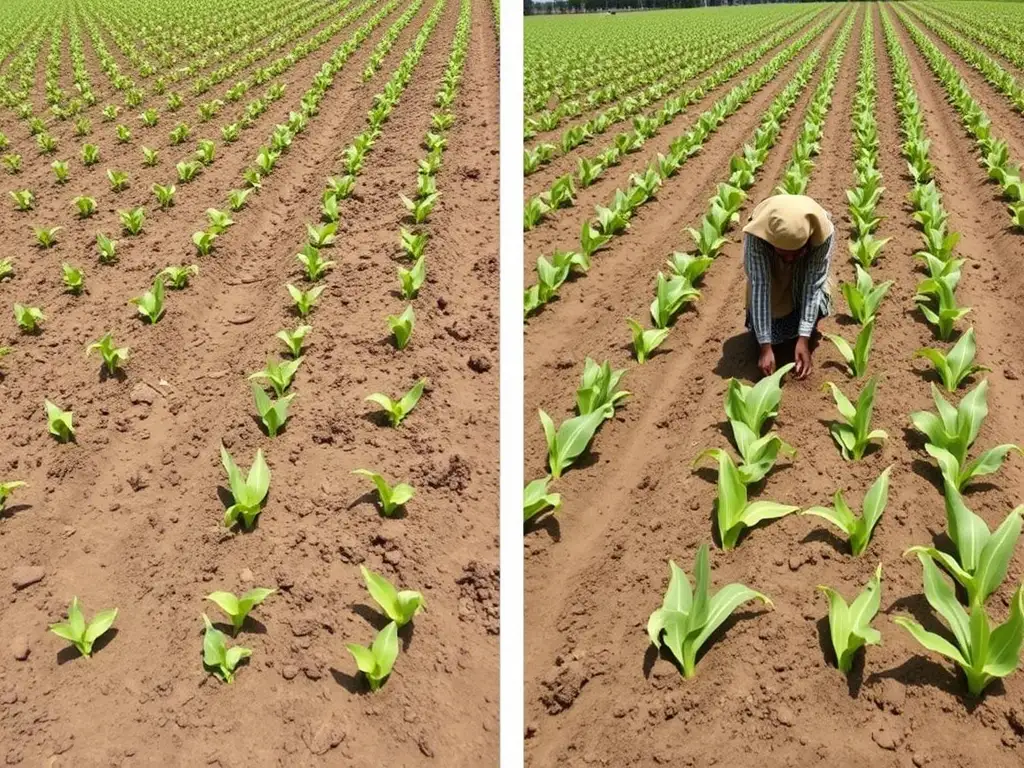
- Seed Replanting and Thinning: Within one week of sowing, inspect the field. Replant seeds in areas where germination has failed to ensure uniform growth. Between 12-15 days after sowing, thin out overcrowded plants to maintain an optimal density of 19,000 to 21,000 plants per acre for maximum yield.
- Earthing Up: When maize plants reach a height of about one foot, mound soil around their base. This strengthens the plants, preventing them from lodging (falling over), improves root anchorage, enhances drainage, and suppresses weed growth. Earthing up is typically done at 30 and 45 days after sowing, coinciding with fertilizer application, and must be completed before flowering.
These practices create a robust foundation for maize plants, ensuring they thrive through their growth stages.
Weed Control: Identifying and Managing Threats
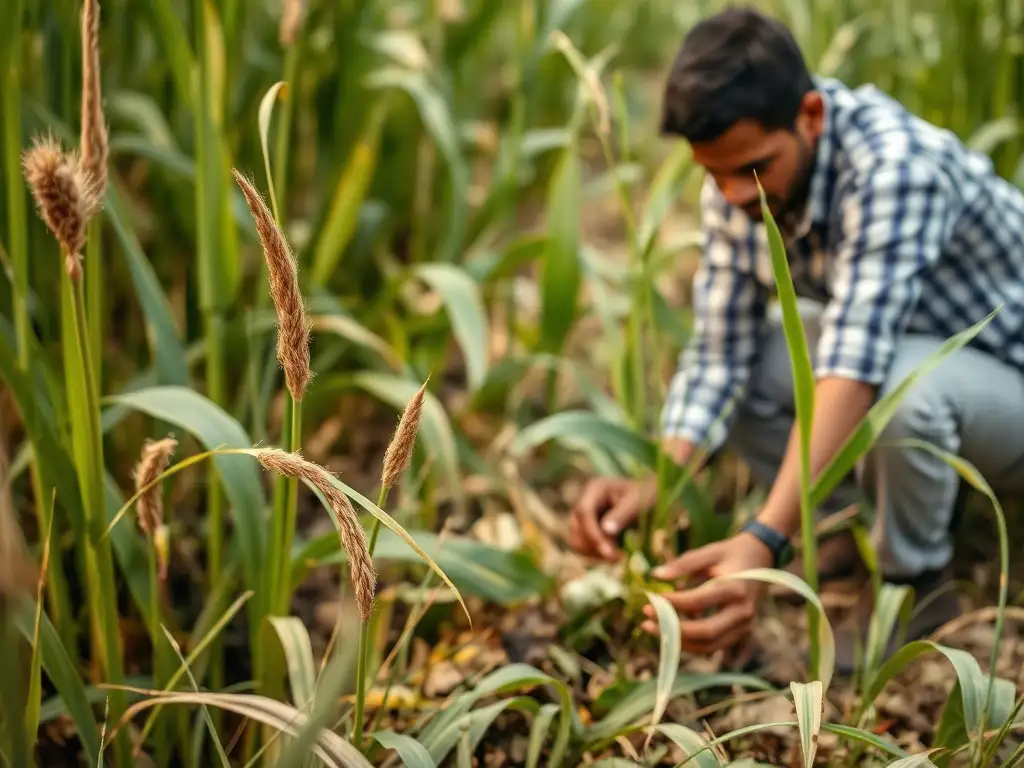
Weeds compete with maize for nutrients, water, and sunlight, reducing yield if left unchecked. Below are the common weeds found in maize fields and effective control measures:
Types of Weeds
- Grassy Weeds:
- Shyama grass (Echinochloa colona)
- Digitaria sanguinalis
- Fulfulia (Eleusine indica)
- Durba (Cynodon dactylon)
- Sedge Weeds:
- Mutha (Cyperus rotundus)
- Broadleaf Weeds:
- Cleome viscosa
- Dudhia (Euphorbia hirta)
- Amaranthus viridis
- Physalis minima
- Scoparia dulcis
- Latmari (Digera arvensis)
- Blainvillea latifolia
Weed Management Strategies
- Manual Weeding: At two weeks of plant growth, perform the first hand-weeding to thin plants and mound soil around their base. Repeat hoeing every 7 days for two cycles to keep the soil loose, clean, and weed-free. Controlling weeds before flowering is critical for optimal yield.
- Chemical Control: For grassy and broadleaf weeds, apply recommended herbicides:
- Atrazine 50% WP (e.g., Atrataf, Atragold): 400-800 grams per acre, applied 1-2 days after sowing.
- Mesotrione 2.27% + Atrazine 22.7% SC (e.g., Calaris Extra): 1400 ml per acre, sprayed at the 3-4 leaf stage of weeds.
- Tembotrione 34.4% SC (e.g., Tombla, Laudis): 115 ml per acre (0.5 ml per liter of water), applied post-emergence.
- Topramezone 33.6% SC (e.g., Elite, Tanzar): 30-40 ml per acre (0.2-0.25 ml per liter), sprayed at the 2-3 leaf stage of maize.
Ensure soil moisture after herbicide application. If using Atrazine, irrigate the field afterward. Alternatively, use a cycle weeder between rows for cost-effective weed control.
Irrigation: Ensuring Optimal Water Supply
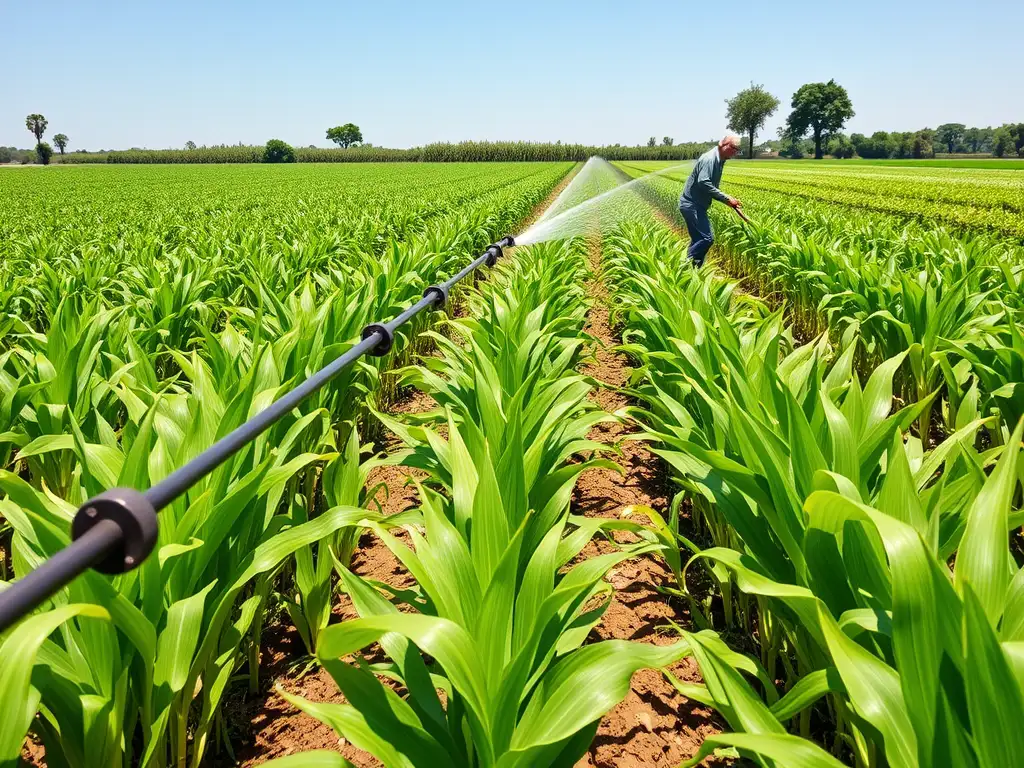
Timely and adequate irrigation is a key determinant of maize yield. Maize is sensitive to both waterlogging and drought, requiring 50-60 cm of water throughout its growth cycle. Here’s how to manage irrigation effectively:
- Kharif Season: Maize is primarily rain-fed during the monsoon. Monitor rainfall and provide 1-2 irrigations if delays occur. Avoid water stagnation at the plant base.
- Pre-Kharif and Rabi Seasons: Four to six irrigations are needed, depending on soil and climate conditions. Critical growth stages requiring irrigation include:
- Seedling to flowering: 1-2 irrigations.
- Knee-high stage: 1 irrigation.
- Tasseling (male flowering, 40-45 days): 1 irrigation.
- Silking (female flowering, 55-60 days): 1 irrigation.
- Grain filling: 1 irrigation.
If limited to three irrigations, prioritize the seedling stage, tasseling, and grain-filling phases. Water deficiency during tasseling and silking can reduce yield by up to 10%. In dry spells during the monsoon, irrigate every three weeks if soil moisture is low.
Conclusion
Maize cultivation demands a balance of intercultural care, weed management, and irrigation to achieve high yields. By replanting seeds, earthing up plants, controlling weeds with manual and chemical methods, and providing timely water, farmers can ensure a bountiful harvest. Stay tuned for our next article on zero-tillage maize farming techniques for sustainable agriculture.
For more insights on maize cultivation, click here to explore additional resources.